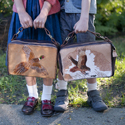
Another Contest and a Book About Food

Posted by jdg | Monday, December 07, 2009

It's time for another contest and this one requires more than just a comment (that means your odds of winning are that much greater if you choose to participate). As you may have noticed, Shutterfly has been sponsoring this website through advertising for several months now and I couldn't be happier about it. This advertiser offers a service that lets people be creative and give unique gifts and as I've written before, I really love creating personalized books for the kids. We make half a dozen or so every year, from gift books for the grandparents to photo "albums" to help remember vacations (even if it's just Cincinnati) to paper versions of the sort of silly projects I've shared here. Luckily, just before my laptop died I'd placed an order for a bunch of books to give as gifts this year, and one for the kids I've been working on for months. The books arrived a few days ago (and don't worry, I paid for all of them myself).


I wanted to create a book that would make the kids think about where their food comes from. Every Saturday morning we walk up to the big weekend market and it's become a huge part of our lives. All my resentments and frustrations about living here wash away on Saturday morning while I buy fresh produce and unique local products surrounded by other people from all over the area and from all sorts of backgrounds doing the same thing. I know my kids will remember this tradition and I wanted to create a book that would both memorialize it for them and also help them think about how their food doesn't just come from Supermarket shelves.

For the front and rear covers I created a collage of all our Saturday hauls that I've been photographing for a few years:


Inside, I used some photos I've had for years along with some I took specifically for the book. We went out to Calder Dairy Farm to meet the cows who supply our milk:


Later I saw the farm's delivery truck at the store where we buy two gallons a week and snapped a shot:


While you can use the Shutterfly software to add text, I'm accustomed to adding the text myself in photoshop before I upload the pictures. Sometimes I skipped text altogether and just included pictures of the market that I hope will help the kids remember how beautiful those mornings were. I also took pictures of all our favorite farmers.


During the growing season we buy most our produce from farms here in the city limits, and I wanted to include something about the urban farming movement in Detroit. The pictures of Detroit farms I included were all taken on bike journeys with the kids:


The book is 33 pages long so these are just some examples. If you want to see the whole thing, just click here. I've been pleasantly surprised by how much my daughter loves it (but who wouldn't love a book about their own life?). She already has it mostly memorized and even "reads" it to her brother:


* * * *

Today I'm offering the chance to make your own book and win a whole bunch of prizes from Shutterfly, including two (2) 7" by 9" photo books, 25 greeting cards, 25 stationary cards, and a photo calendar. I am sweetening the deal by adding a free gift basket of some of our favorite non-perishable Detroit goodies from Eastern Market for the winner. You have one week to enter (deadline: Monday, December 14, 2009 12:00 p.m. EST).

To enter the contest, just create a book and add it to my Shutterfly community page. Your book can be as simple or as complicated as you want. It doesn't need to be a story, it can just be pictures. You do not need to share personal images or even order the book to be considered for the contest. Shutterfly's website can easily help you make a book from images on your computer within a matter of minutes. It will be especially easy to enter if you've ever created something with Shutterfly before. Once your book is done go to my shutterfly page and click "add" to share your book with me and I will pick a winner at random from all books shared.

I will announce a random winner on this site on December 14, 2009 (which I believe still gives you time to order and receive the free gifts before the holidays). I really look forward to seeing what you folks might create. Good luck.

Gratitude

Posted by jdg | Tuesday, December 01, 2009

Several friends and acquaintances have recently announced their first pregnancies, and I find myself offering the usual pithy niceties and dull truisms, an aloof veteran patting the backs of the new recruits just before they hoist themselves over the top into the maelstrom of shrapnel and armament. Welcome to the trenches. I hope you don't mind the smell of human excrement.

But there's more to it than just that.

* * * * *

We spent part of last week at my mother-in-law's house. My son had a 12-hour norovirus. We share a room with him there and he vomited all over his bedding and portable crib and even after cleanup we fell back asleep in a room that smelled like the afterparty of the competitive fried-mozzarella-stick-eating championships.

The next day I sit marveling at the premium-cable television stations my mother-in-law pays for on her giant flat screen, wondering if one day we too might enjoy television without constantly being interrupted by middle-aged men imploring us to try the simple capsule for natural male enhancement that increases the size of that certain part of a male body. My sick son is sitting on my lap and we are watching some movie I think is called Space Chimps vs. Monster Aliens and he coughs slightly and then vomits all over my shirt and pants. Under any other circumstance, if something you were holding started regurgitating yogurt-flavored stomach acid all over you, you might be inclined to drop it, or even toss it towards the CGI monkeys on the jumbotron across the room; instead, the thing is whimpering and so sick you hold it against your chest, comforting it even while confronting your own disgust, waddling towards the nearest drain where you hose yourself down along with this howling, parasite-lair of an offspring.

Nothing will ever be the same.

* * * * *

The bug in my son's stomach passes into my daughter's, but I don't know that yet. The night before Thanksgiving she tells my wife her stomach hurts, but I'm in the other room on my laptop, tapping away as usual (when you ask my daughter what her father does for a living, she says he writes e-mails). I am focused on the computer while she hovers between sitting on my shoulder and the right arm of the lounge chair begging for some youtube video when she coughs slightly and vomits directly onto my laptop keyboard and the screen goes black with a brief reverb of circuitry within, then silence, a whiff of something electrical before the scent of this esophageal diarrhea hits us and she spews out a good bit more and the sight of it all sends my son into hysterics. 

Pandemonium: pan-də-ˈmō-nē-əm\ noun from Greek pan- + daimōn Date: 1667
1 the infernal regions; the capital of Hell in Milton's Paradise Lost
2 not capitalized : a wild uproar : tumult: a state of extreme confusion and disorder.
3 our living room after my daughter's vomit short circuits my laptop and I'm howling about it and dragging her and it across the room with reddish gloop oozing out of the USB ports.

I didn't mean to do it, she shouts. I know, I say to her. It's not your fault. The kids holler until they're clean and calm. I can't find a screwdriver small enough to take the computer apart so the innards sit there marinating until a kindly neighbor offers up his eyeglass repair kit and I finally peel it apart to spend the next three hours with a box of q-tips swabbing foreign matter out the nodules and slots and sockets (I later learned it was strawberries). After midnight, I put it all back together and miraculously it powers up.

I go into my daughter's room to kiss her goodnight and find her sweating under blankets. Her best friend has lately found other kids he'd rather play with at school, and in her sleepy state that's the first thing on her mind. Through her dream haze she says to me, "It's good that he wouldn't play with me today; I might have made him sick." Here I've been worried I upset her with my reaction to what happened, but heavier things weigh on her tiny heart. 

"I just want you to know that I love you, and that my computer isn't broken after all."

"Okay, Pops."

"And don't you worry about him. He doesn't know how much fun he's missing."

* * * * *

In the morning the laptop is dead.

Overnight the acids corroded something essential. My brain can't help working through the justifications and rationalizations of replacing it. I hate nothing more than spending money. I mope for a bit on the couch and my daughter comes over and snuggles up to me and sits there for a while, vaguely patting me on the head and singing me a song. It was quite touching. And it was time I would have ordinarily spent typing.

We drive to Pittsburgh for the big meal, and the whole way there the only thing I can do to console myself about my ruined MacBook Pro is envision John Hodgman saying snide things to Justin Long covered in vomit:


We keep our eyes on the kid every time she makes a sound, knowing that the only way this could get any worse is if she fills the car with that sickness. It turns out she's already over it, but when we get to Pittsburgh no one's there for dinner because my wife's stepbrother has overdosed on heroin and everyone is with him in the ICU. When his mother returns she sits with my wife in the kitchen over cold stuffing and an uneaten turkey and I listen to her fall apart, a bit drunk, her son in a coma with machines breathing for him, at a loss for what to do with the child she found choking on the vomit in his lungs and a needle still in his hand.

* * * * *

It's just a goddamn computer, says the universe. You complain to the universe that she could have done it a few steps away; her aim could have been a bit to the right; she could have skipped the strawberries altogether. The universe gently presses your lips together, shushes you. You could have put the computer down for once.


You watch your children sleeping in the car on the way back home. Your brain returns to the $1700 emesis. Years ago something like this might have made you angry. If your college roommate had done it, you might never have forgiven him. But how could you be mad at her? You might as well be mad at the wind.

They will change you in ways you'd never expect. They will puke all over everything and it will do nothing to change the fact that you would tear out your own heart to see them go unhurt.

The lingering odor of dried vomitus. You never knew love could smell this bad.

Six Hand-Painted Signs

Posted by jdg | Tuesday, November 24, 2009 |


"FREE Souvenirs from
Detroit Please Take
Some Home Today!"
[on east side garage filled with dumped garbage]


"I said a prayer for you today,
if Butterflies could
fly to heaven, I
would send you my love!
to give, And send yours
right back to me. . ."Son," no
one could take your
Place; couldn't ask for a better
son. . .I love you! Mom"
[tree shrine, Brightmoor]


"Brad and Angie are not coming! We have to do it OURSELVES!"
[abandoned house, Cochrane St.]


"FRESH COONS 834-8617"
[East Mack Ave.] See here.

 
"FENKELL PET STORE
ANY VARMIT YOU WANT
FREE"
[abandoned storefront, west Fenkell]


"WILL THE LAST
PERSON TO
LEAVE DETROIT
KINDLY TURN
OUT THE LIGHTS
THANK YOU"
[vacant lot, east side]

Two photos available at 20x200 today!

Posted by jdg | Wednesday, November 18, 2009

I am really excited to announce that I have two limited edition photographs for sale today at one of the coolest art websites around: Jen Bekman's 20x200. I stopped selling photos online over a year ago, but when I set up that shop I was really inspired by 20x200, so it's an honor to have some work available there at its extremely affordable prices. If you're not familiar with 20x200, it's a populist-minded online gallery with "art for everyone": 200 prints in each edition for $20 each. Every week they put up four editions (two photos, and two works on paper) in three or more sizes. Jen and her staff chose two of my photos that have gotten the most inquiries as of late; click here and here to see them. While there you should poke around and see if there's something else there you might like. Art makes a great gift! My wife has bought me quite a few pieces through 20x200, and the site has featured some of my favorite photographers like Beth Dow, Brian Ulrich, Raul Gutierrez, and artist Anne Toebbe. Be sure to sign up for Jen's newsletter to get the inside scoop on new 20x200 editions.

Every photo is printed with archival pigment inks on 100% cotton rag paper with a luster finish (I've seen the proofs and the paper and printing are exceptional). Each comes with a signed certificate of authenticity.


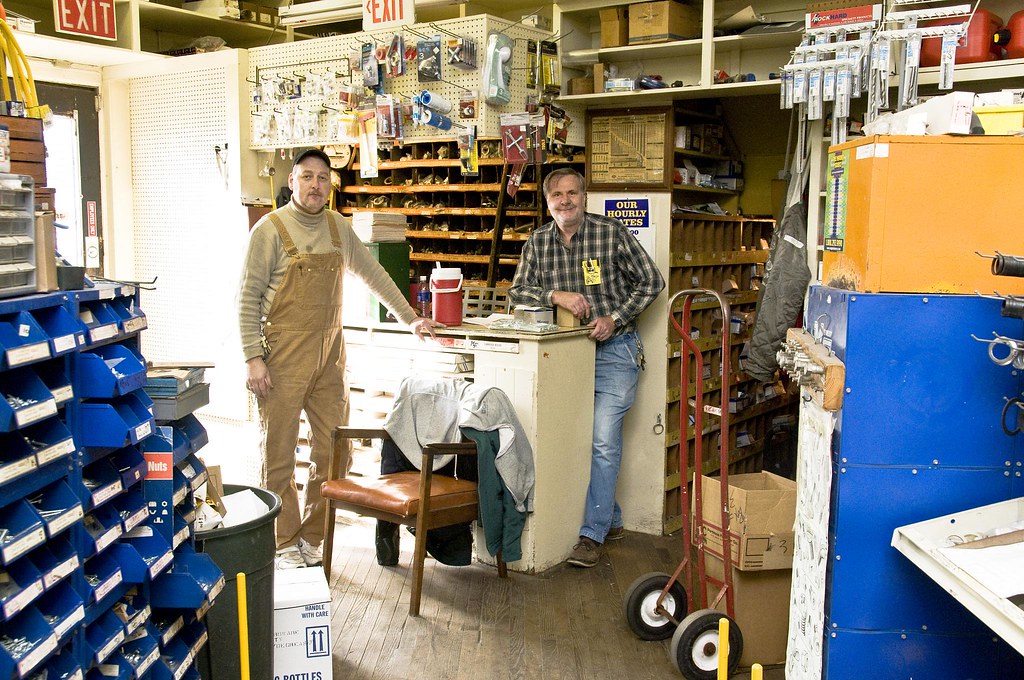
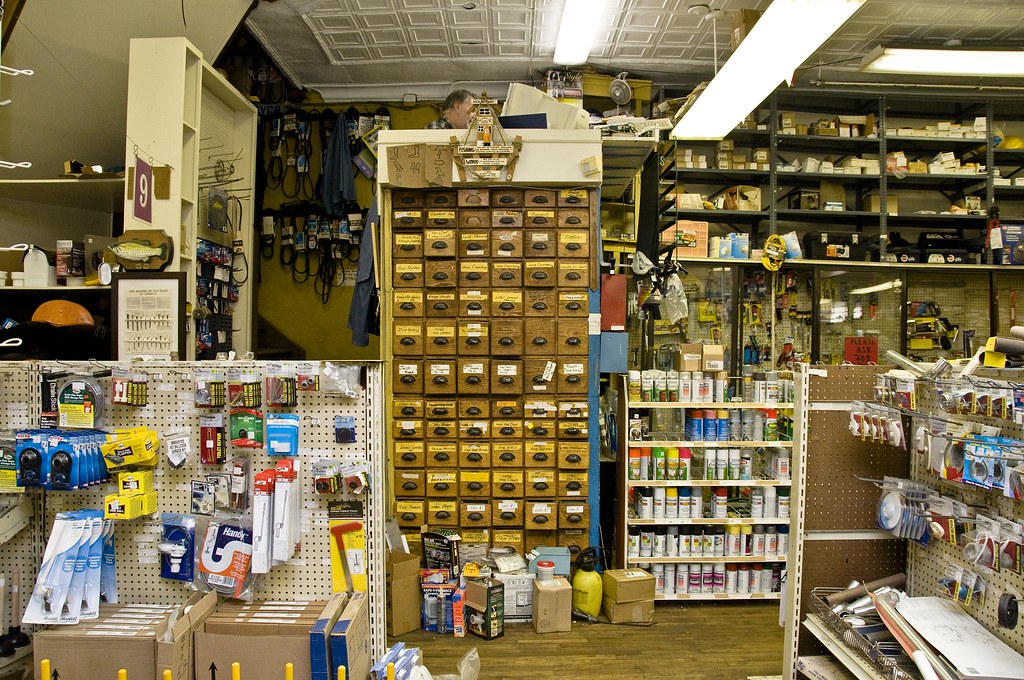
I bug Richie Crabb for about a week to talk to me about his hardware store for my "blog." I'd assumed it would be easy: I'd take a few pictures, scrawl out a few stories, and be out of his hair in twenty minutes tops. But every time I come in he's shooting the shit with somebody else and I don't want to interrupt. As I wait for him, lingering in the aisles and watching the employees helping customers I realize that Busy Bee Hardware on the corner of Gratiot and Russell in Detroit really is busy. I've always felt like I was the only customer there, but only because that's how they've always treated me. A steady stream of customers comes in and each of them gets the same friendly treatment. That conversation about fishing started because someone had a question about halogen light bulbs. The guy who needed some rope thimbles ends up talking about his dogs. Conversation is more the nuts and bolts of hardware retail than actual nuts and bolts. The hardware salesman must help solve problems he cannot see; he is a handyman of hypotheses; a surgeon who diagnoses from a distance, sells you the right scalpel and sends you on your way. The hardware salesman translates your need for a thingamadoodle or a whatsamajigger into something you carry away in a brown paper bag; and if you are a professional he must speak your jargon too.

This is why mom & pop hardware stores have the appeal that they do. It's just not the same asking some guy in an orange smock how to snake a drain that your kid shoved his toothbrush down. I once had an associate at Lowe's claim he couldn't tell me whether the 6#16 to 2#10 gauge wire connectors in my hand were the right size for a simple rewiring project. "If your house burns down, you might sue," he told me before I walked out frustrated and empty-handed. At Busy Bee, our neighborhood hardware store, that would never happen. There are two knowledgeable and helpful employees on the floor (neither is related to the owners but that doesn't mean they aren't family: Ted has been with them for fourteen years and Roy's been there since 1984). Ted once walked me through a hack to rewire a light switch so my formerly outlet-only pendant lamp would be properly grounded, and he's never once mentioned concern about litigation.
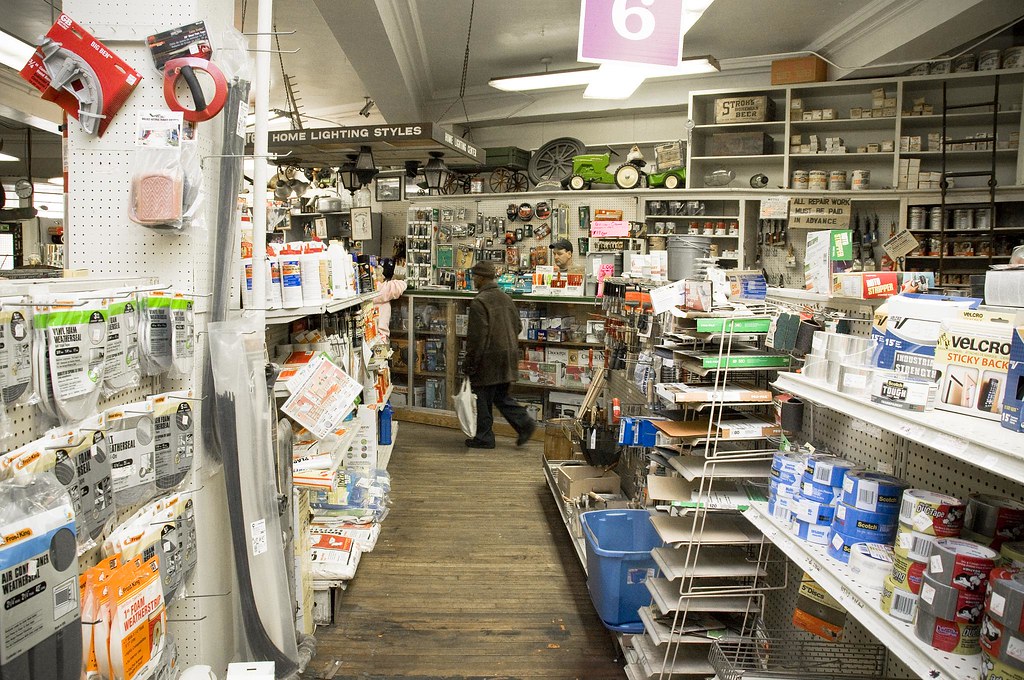


While I wait with my notebook, Roy opens the door for a man in a wheelchair who needs a key made. An elderly woman needs a new rubber stopper for one leg of her walker (75 cents) and Ted treats her like she's a Hollywood starlet in a Rodeo Drive boutique. She puts down a few more dollars in layaway towards the crock pot they're holding for her behind the counter. Another woman comes in to exchange some jigsaw puzzles from the big pile right by the door. These people know and care about their customers. Some regulars remember shopping there with parents and grandparents, and many have fond memories of the owners' parents who ran the store before them. Busy Bee is a bulwark against the forces threatening to destroy this community. It is a place where everyone who walks in the door is treated with the respect that a human being deserves.
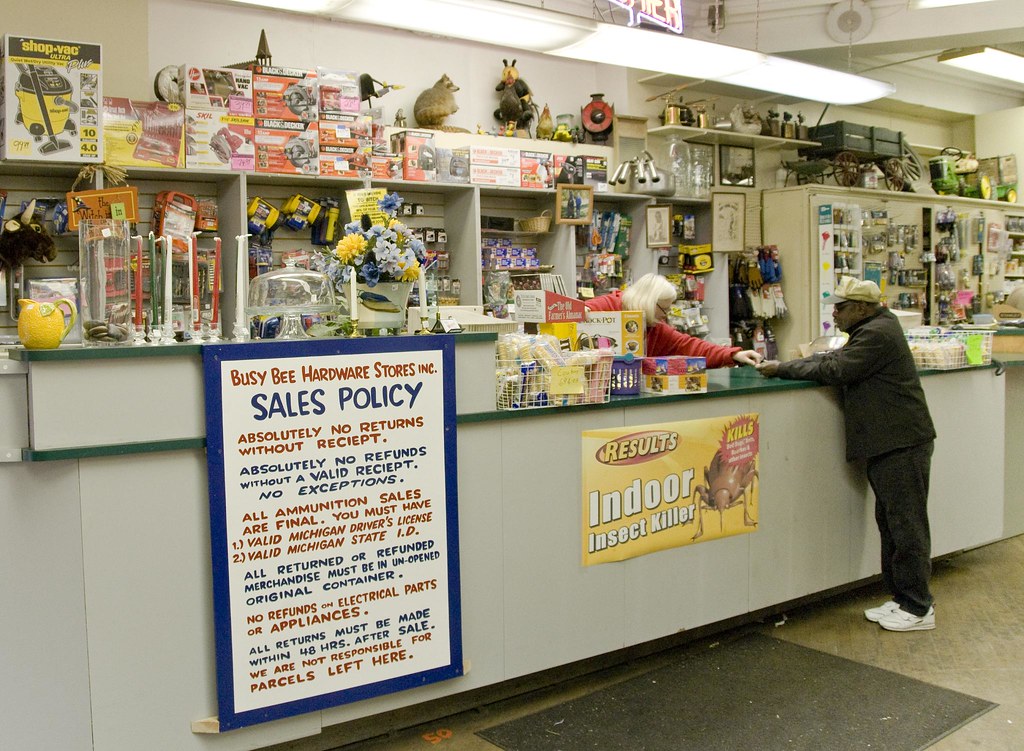


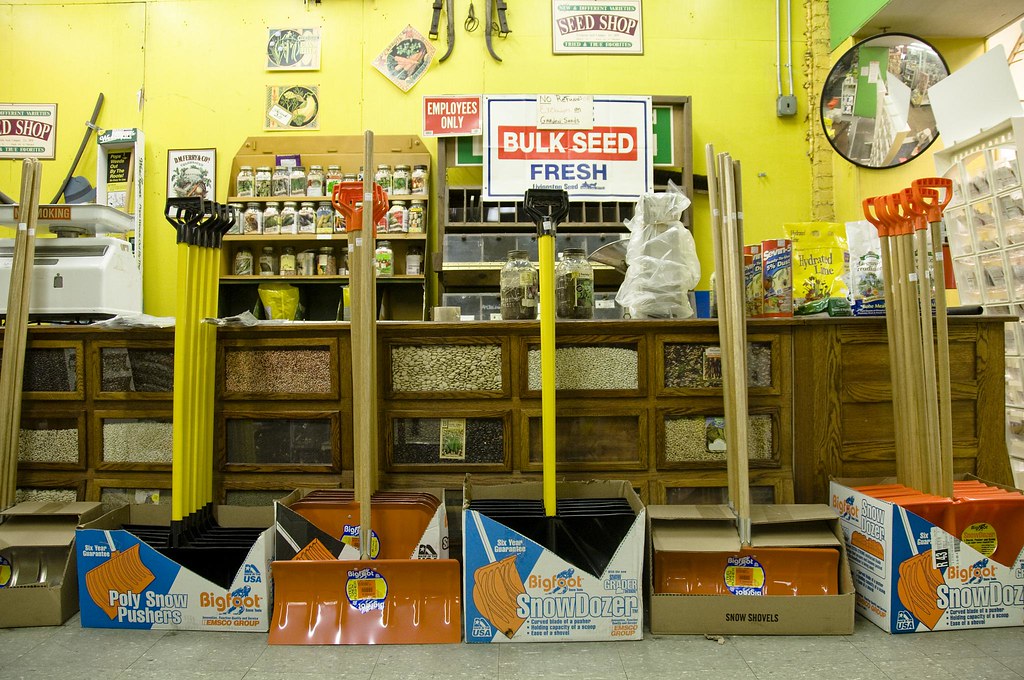
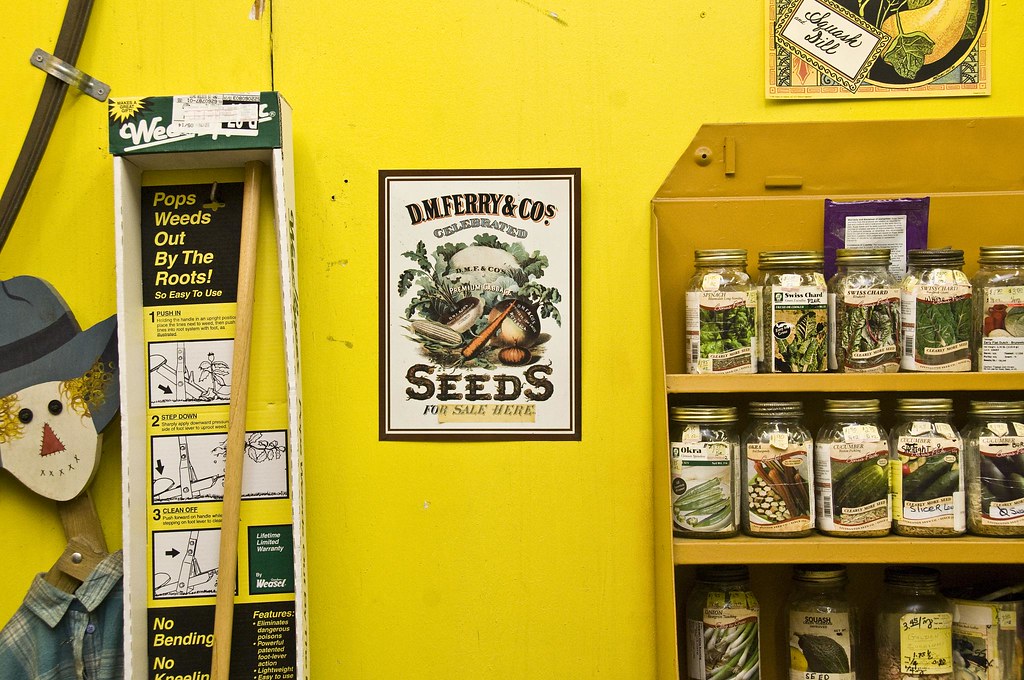
Sandy Novak, Richie's "much younger" sister, is a natural storyteller and the store historian. She tells me Busy Bee traces its origins to 1918, when Julian Berkovitz opened a mercantile to cater to the farmers bringing their goods to sell in Eastern Market, recognizing that many of them stayed overnight in nearby hotels and most of them had wads of cash from their market sales. Busy Bee helped them lighten their wallets and fill their empty wagons with the things they needed: hardware, appliances, tools, housewares, toys, tack and harnesses (they even outfitted the Detroit Police Department's mounted patrol). When the Barnum & Bailey Circus came to town, they would visit Busy Bee for repairs, giving rise to the store's motto (still printed on stationary today): Everything from a mouse trap. . . to a tame elephant. Detroit's own Ferry Seed Co. supplied seeds for the farmers. The original seed counter and signage are there today, and the store still sells seeds and a complete line of gardening and canning supplies to Detroit's urban farmers and growers:


Sandy shows me a photo of the interior from 1924. The floorboards are the same, creaky and faded now after nearly a century of wear. The ceiling above us today is the same ceiling above her grandfather Herbert Crabb, the man who befriended Berkovitz's son-in-law in the trenches of World War I and came back to work in his store. Herbert's son Raymond and his wife Gwendolyn (Sandy and Richie's parents) took over the business in the 1940s and ran it until the eighties.

In the 1960s, the neighborhood of houses south of the store was torn down in the fit of urban renewal that built the apartments buildings and townhouses in our neighborhood today. "People in apartments don't need hardware stores like people who own houses," Sandy says, but the business made it through Detroit's most turbulent years because of her father's astute decision to buy the old washtub factory across the street and use it to store rock salt to supply regional businesses during the winter months. Every August, thirty-five semi truck loads of salt were delivered to the warehouse along with ten trucks of calcium chloride, and that supply would turn over 2-3 times every winter. Sandy estimates that on a good year they'd sell 135 semi trucks worth, and that's how rock salt saved their store. "It's awful to say, but the worse a winter was, the better we'd do." For decades, Busy Bee was one of the major salt wholesalers and retailers in southeast Michigan.

Richie Crabb has a bad back that bore more than a few 50-lb bags of salt in its day. He grew up in this store, and in the 1980s he took it over with his sister, the third generation of their family to run it, and you can find him there nearly every day, usually watching over the store from his seat above the giant chest of drawers filled with hose clamps and casters and couplings, surrounded by order forms, inventory lists, Matryoshka school photos of his two sons, a 386-IBM with a dysfunctional dot-matrix printer. He fills out forms the old-fashioned way: by hand. Whenever I walk in the door with my kids, I hear him shout from across the store: "There they are! How are the kids today?"


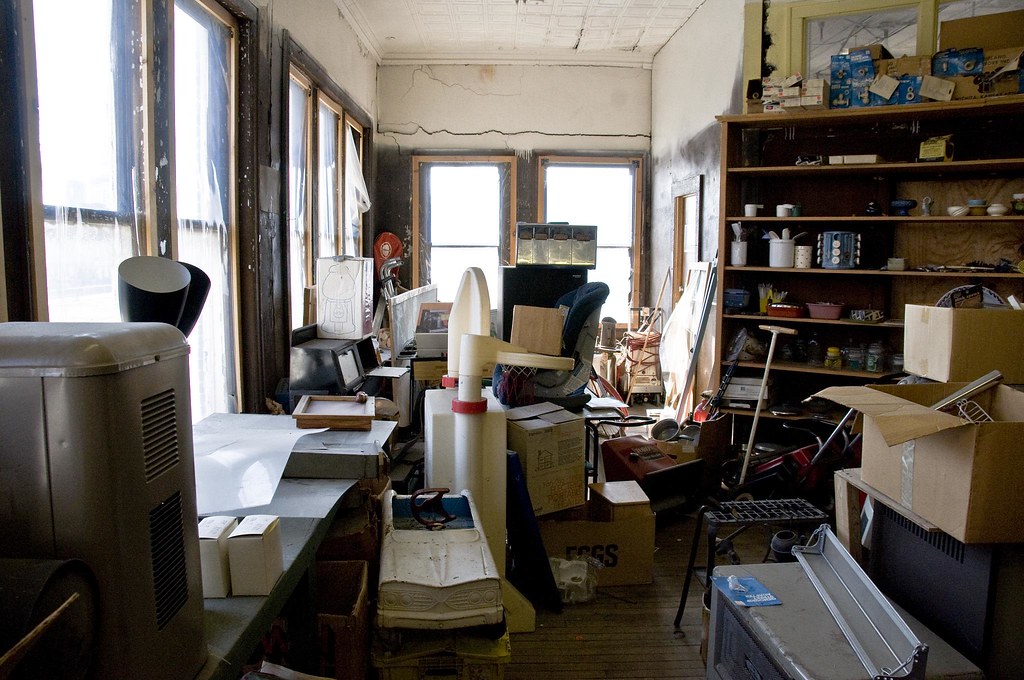
Today he finally sees me and smiles because he remembers he's promised me stories. I follow him up the century-old stairs and he shows me the second floor, filled to the rafters with vintage, deadstock hardware. There's a room of mid-century ductwork and shelves of dishware stretching to the far wall. There are antique cast-iron stoves and turn-of-the-century safes and early hot water heaters and drawer after drawer of unbelievable treasures: antique bike hardware, ice skate blades from the 1920s that you'd attach to your shoes, glass Thermos inserts, elaborate stove dampers. Richie takes me around for nearly an hour showing me each treasure with the excitement of a museum curator.

In a well-lit corner, he points to an older car seat, an antique pedal car, a stack of board games, a basketball hoop, and a few scattered toys:


"This is where we played as kids," he says, "And where our kids played. Things weren't like they are nowadays. Back then you brought your kids with you to work." The kids of all the family businesses in Eastern Market would hang out here, he says. "We could watch them kill chickens down at Capitol, or hang out here. The boys liked it here because they could build things." Many of the store owners from around the market were old friends, and gathered often to play cards.

The store boasts the only rope-operated elevator in the city. Sandy tells me that at the bottom of the shaft there was a tunnel connected to the basement of the building next door, which was a maze of dead-end hallways and doors that opened on to brick walls. They speculate there was a prohibition-era distillery down there, and the tunnel and a secret walkway over the alley connecting the two buildings allowed the bootleggers to escape into the store and pretend to be shoppers if there was a police raid. Sandy suspects old Julius Berkovitz had some connection to the infamous Purple Gang, and shows me an old photo of the gangsters:
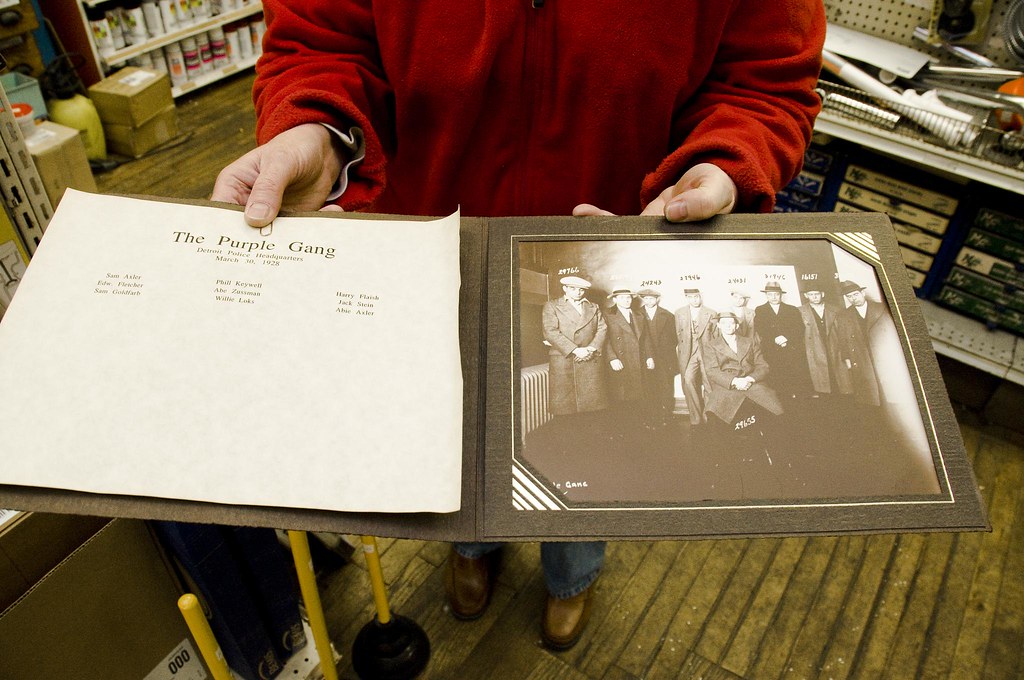

There are probably plenty of colorful stories collected over so many decades of running a store in such a rough town, but to their credit Richie and Sandy never once mention any crime other than bootlegging. When I ask about any crazy stories Richie says, "You mean like the guy who bought some ammo, shot himself in our vestibule and called to thank us for saving his life the next day?" Yeah, I say, like that. "Oh, there's lots of stories like that."

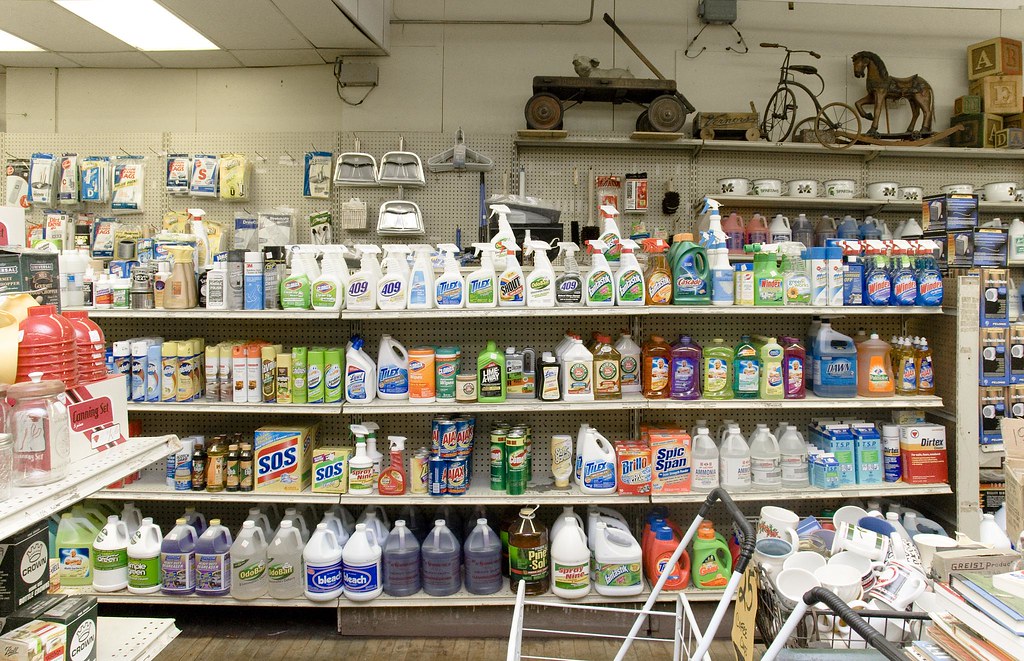
Busy Bee sells more than just hardware. There are used paperbacks, 25-cent coffee mugs, kitchen utensils and appliances, cleaning supplies, candy, Better Made potato chips. It's still something of the general mercantile it was when it opened in 1918. It's a "vernacular" shopping experience suited to the needs of a community with few other places to shop. There are very few things you might need around the house that you can't get here.


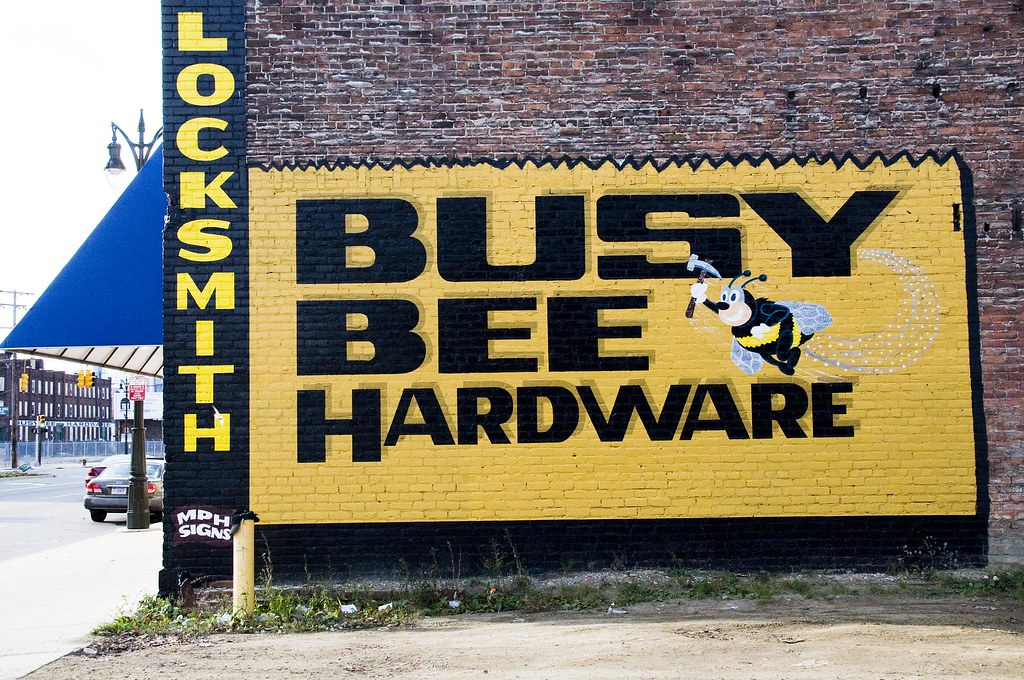
Over the years that I've shopped here, I've noticed that the prices are probably lower than they should be. I've even compared prices on certain items to the prices at suburban big boxes and in every case this little corner hardware store's prices were lower. Part of that, of course, is because it serves a population that simply can't afford inflated prices. But there's something else: I've heard Richie say, "If we were only doing this to make a profit, we'd have stopped a long time ago." They do put some of the vintage stuff on eBay. They still move some salt in the winter. But it is clear they're in here every day for reasons other than money. As Jonathan Richman sings, "this was love." Then I hear Richie say something else: "If we close up shop, this will just be another empty storefront, just another dead corner in Detroit." The store is known for the bright yellow murals on its exterior: busy worker bees holding tools and bumbling around, making a corner that could be dead buzz with life instead.


Sandy's husband Mike operates a lock shop in the back of the store, and eventually they want to retire up north. Richie's boys, both in school, work in the store on weekends but have their own dreams and don't want to take over the business. Sandy urges me to write something about how eventually they want to sell it to a family who'll run Busy Bee in the same spirit their family has for all these years. "Maybe," she says, "Someone will read what you write and say 'Hey, that doesn't sound so bad.'"

"If I can even come close to conveying how important this place is," I say, "Plenty of people will at least wish they could."


Busy Bee Hardware is located at 1401 Gratiot in Detroit, Michigan. It is open M-F, 8:00 a.m. to 4:00 p.m., and Saturday from 9:00 a.m. to 2:00 p.m. If you come to the market, there's always parking on Russell just south of Gratiot so you can stop in and say hello before or after you shop for produce. More photos here.

Also, this is the sort of story that John at Detroitblog does really well. Sweet Juniper is a personal blog and I only plan to write about businesses in the context of how we shop in a city without much national retail; if you are interested in reading more generally about interesting Detroit businesses, there's no better place than Detroitblog.

A few months ago a writer for the Wall Street Journal bemoaned the lack of national retailers in this city with the overt message is that it is fundamentally a terrible thing. Later I read about Icelanders celebrating the retreat of McDonalds from Reykjavik as a silver lining to the economic collapse there (even the Wall Street Journal wryly notes, "As cultural calamities go, there are worse fates. . .") or small towns activists lauded for keeping out a Wal Mart, or resort towns like Saugatuck, Michigan celebrated for keeping out all national chains. But the fact that Detroit has but one Starbucks and no Wal-Mart means we should be rending our garments and pulling out all our hair.
I laugh when New Yorkers complain about the strip mauling of Times Square or when I hear their weird nostalgia for when it was seedy and dangerous. If you really miss seedy and dangerous, I know a house I can sell you for a dollar. Seriously. The fact that risk-averse national retail outlets who care only about the bottom line won't invest here is part of why I love living in Detroit. Being skipped by decades of prosperity means that this city doesn't look like everywhere else. It comes at quite a cost, but I'll be doggone if I wouldn't celebrate the absence of these national retailers rather than add it to the heap of things we already have to complain about here.

How can you live without a big box grocery store? Where do you shop if there aren't national retailers? The retail vacuum is filled by the sorts of small companies and individuals willing to take risks or persevere under circumstances that corporate retail giants wouldn't tolerate. I find it inspiring, and from time to time I am going to write about some of the businesses we love and support to provide a counterpoint to the Wall Street Journal's overblown funerary dirge for Detroit retail.

This is really just a prelude, or an explanation for a series of forthcoming posts.

Post #1: Busy Bee Hardware Est. 1918
Post #2: R. Hirt Jr. Est. 1887
Post #3: Honey Bee Market La Colmena, Est. 1956

Bused

Posted by jdg | Friday, November 06, 2009 |

The ride took almost an hour each way. One time I stayed on the school bus past my own stop to go to a friend's house and it went deeper into the country where it dropped off the farm girl we cruelly called Sarah Plain and Tall because she was. I can still picture her on the dirt shoulder looking up at the driver for permission to cross the road. The air out there smelled like manure.

I knew our school was "in the ghetto." Willie O'Day told me that's where I was, bitch, out beyond the girls double dutching while his friends held my arms, right before he kicked me hard in the nuts. When we heard gunshots, we raced to the windows in the old science lab before our teacher even knew what was happening. It was usually just a car backfiring, though one time it was an actual gunfight. There was a kid in my class named Achilles, a name that suggested speed was his birthright (and it was). My friends beat boxed in circles, repeated refrains from Raising Hell. The Beastie Boys were gods. At church, my mom once caught me hitting Mikey Carcione over the head with some rusty thing I found on the school playground; she snatched it away and said later it was a crack pipe. I thought it was no big deal, and to her credit she did nothing to let me know how bugged out she must have been. It was only after some kid tried to stab me in the bathroom that I stopped being able to fall asleep at night without her or my dad in the room. I was, apparently, something of a delicate flower.

Sarah Plain and Tall was always on the bus each morning, I'd pass her quiet and pale behind the driver. I'd press my knees into the back of the holly-green vinyl in front of me, patched and repaired from unaccountable ballpoint wounds, and crouch against the window and watch the same scene every morning and afternoon: Queen Annes glazed with ornament, broken into rentals, begging for paint; boarded-up storefronts; the windowless liquor store with black guys drinking out of paper bags in the lot; the plasma donation center behind razor-wire; the church where my mom once took us and we were the only white people there. Hundreds of others had this daily passage, this weird easement through poverty. The bus drove past three other elementary schools just to get to ours. This was 1986. I was nine. And I knew it was only birthright that let me pass on through.